
If you work in travel or hospitality, you’re already feeling it: discovery is moving from “search and scroll” to “ask and choose.” Guests aren’t just browsing links. They’re asking AI assistants for a shortlist, then acting on whatever gets recommended.
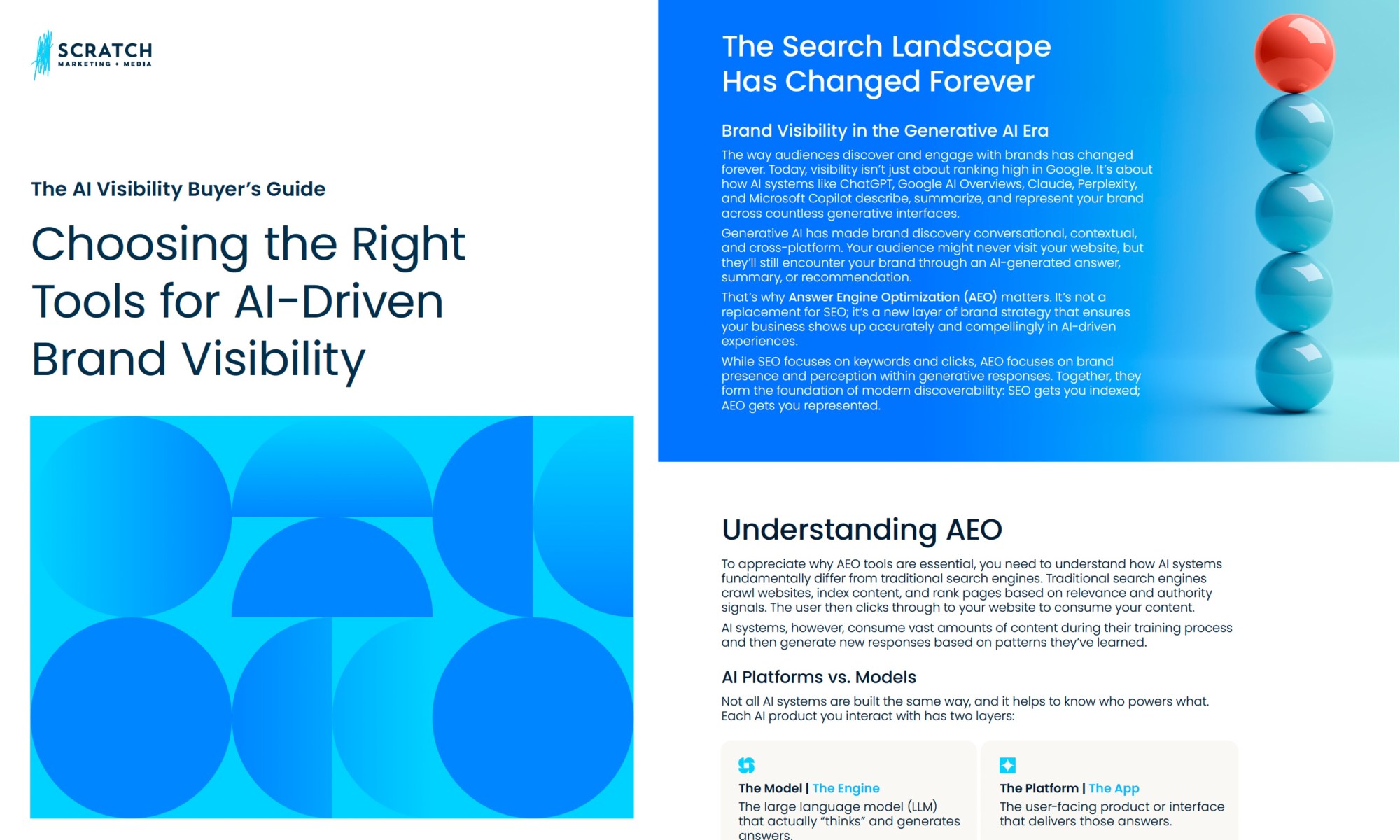
Over the past six months, I went deep on this shift while collaborating with Scratch Marketing + Media in Boston, where we built this Buyer’s Guide to AI Visibility for B2B tech brands. It’s a ScratchMM asset (and I’m proud to have co-authored it), created through hands-on research, conversations across the ecosystem, including with founders, and a practical comparison of how different tools approach measurement.
So why share it here?
Because even though the guide was written for B2B marketers, the core problem is the same for lifestyle brands: AI is becoming a gatekeeper of reputation and recommendation. The “tools” may be bought by different teams, but the questions travel brands need answered are strikingly similar:
- Where do we show up (and where don’t we) when people ask AI for recommendations in our category?
- How are we being described, and is that description accurate and on-brand?
- Which sources is AI trusting when it forms those answers?
- What should we prioritise in content, PR, partnerships and community presence if we want to be “AI-recommendable” in 2026?
To make exploration easier, we also published an AI Tools Comparison table. It’s a quick way to scan the landscape and understand what different platforms are actually designed to do, before you invest time in demos.
If you’re curious about the practitioner view of AI visibility tools, especially the difference between “prompt-style testing” and “measurement at scale”, the guide and the comparison table are a useful starting point (even if you never plan to buy a tool). The bigger point is this: visibility is no longer only about ranking; it’s about how your brand is summarised.
You can request access to the guide here.
 Marta Warren